


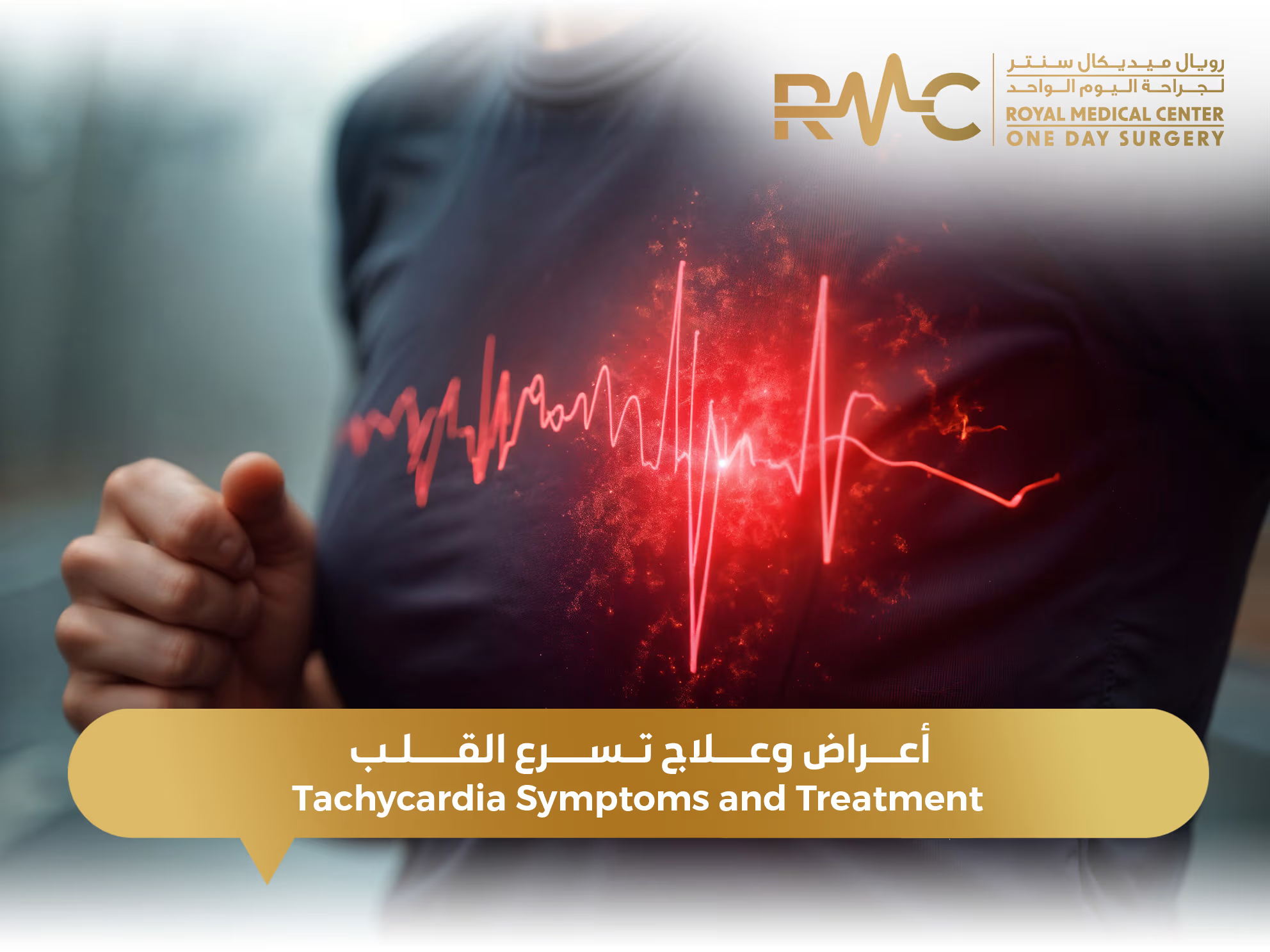
It may be a very unpleasant feeling when your heart begins racing abruptly, especially if it happens out of nowhere and you are just sleeping or trying to relax. Your heart may beat fast without any physical activity to produce it and the heart’s pumping capacity efficiency decreases. You may feel tired, dizzy, or short of breath. If you’re aware of these early warning signs, you’ll be able to determine what’s causing your heart to race and safeguard your heart health in the long term. Royal Medical Center One Day Surgery is one of the facilities offering specialist outpatient treatment and thorough diagnostic examinations. It provides specialist assistance to patients from around Abu Dhabi and adjacent areas such as Shakhbout City, Baniyas and Shamkha.
What are the different types of Tachycardia ?
Tachycardia is not a diagnostic, It is a catchall word for a number of cardiac rhythm abnormalities, categorised by their origin and the speed with which they cause the heart chambers to beat. Accurate identification of the category is essential to the formulation of the appropriate treatment plan:
- Sinus Tachycardia: This occurs when the heart’s natural pacemaker (the sinoatrial node) sends out electrical impulses quicker than normal. Often from common physiological causes including drinking a lot of coffee, exercise, fever, higher anxiety, dehydration or an overactive thyroid.
- Supraventricular tachycardia (SVT): This is a large family of fast rhythms that originate in the upper chambers (above the ventricles). They have a way of coming and going quickly, stirring up rushing emotions that might last minutes or hours.
- Atrial Fibrillation and Atrial Flutter: These are frequent dysrhythmias that occur because of aberrant electrical impulses, which cause the upper chambers to quiver or contract rapidly and transmit unpredictable impulses to the lower chambers.
- Ventricular Tachycardia: This is a major medical problem that originates in the lower ventricles. It prevents the heart from filling up with enough blood, therefore blood supply to the rest of the body is drastically reduced and quick treatment is required.
What Causes and Triggers a Fast Heart Rate?
If doctors know why a heart is beating, they may be able to develop effective ways to stop it. The usual suspects include:
- High Stress and Anxiety: When you panic or are emotionally overwhelmed, your system becomes filled with adrenaline and your heart rate immediately spikes.
- Stimulants: Excess caffeine, energy drinks, nicotine or recreational drugs.
- Medications: Certain treatments include asthma inhalers or OTC cold medicines loaded with decongestants.
- Medical Conditions: Such as hyperthyroidism (thyroid problems), severe anaemia, electrolyte abnormalities or structural heart disease.
- Lifestyle habits: persistent fatigue, lack of sleep, dehydration, and regular alcohol use.
Recognising the Signs of Tachycardia?
Some others sail through events without a sense. For others the abrupt heart beating is immensely taxing and unpleasant. Typical symptoms include:
- Heart Palpitations: Your heart can feel like it's beating faster, harder, or irregularly than normal.
- Shortness of breath: This is when you feel like you can’t get enough air or have difficulty breathing during everyday tasks or even while you’re resting.
- Dizziness and lightheadedness: A sudden dizzy spell from reduced blood supply to the brain.
- Weakness and Fatigue: Your fat pounding heart is not pumping effectively, leaving you always tired.
- Chest Pain: A sensation of tightness, pressure or a dull aching in the chest.
- Fainting (syncope): A temporary loss of consciousness that occurs when the flow of blood to the brain suddenly drops.
If these symptoms recur on return, a quick check by a professional may forestall further problems.
What are the Diagnostic Procedures?
To diagnose an irregular heartbeat, you need the right technology to detect it. At Royal Medical Center One Day Surgery, during the consultation, a cardiologist could recommend:
- Electrocardiogram (ECG/EKG) : watches the electrical activity of the heart in real time to detect any irregular patterns.
- Holter or Event Monitors: These are portable monitors that you wear for 24 hours or up to several weeks that catch occasional spikes in your heart rate throughout your daily life.
- Echocardiogram: This is an ultrasound that looks closely at the anatomy of your heart, its valves and how well it pumps.
- Electrophysiology Study (EPS) : A complicated test performed to trace electrical circuits directly in the heart tissue.
Ways for Managing tachycardia?
Treatment of tachycardia relies largely on the kind of tachycardia, the severity of symptoms and the underlying cause. Some common alternatives include:
- Vagal manoeuvres:If you have an unexpected episode of SVT, simple bodily motions such as coughing, holding your breath and straining or pressing an ice pack to the face, may activate the vagus nerve and reduce the heart rate.
- Medicines: Your doctor may prescribe rate-controlling pharmaceuticals such as beta-blockers or calcium channel blockers or antiarrhythmic medications to help quiet down aberrant electrical pathways and return resting heart rates back to normal.
- Cardio version: If medications don’t work, certain chemicals or a synchronised electrical shock may be given in a supervised medical environment to immediately jolt the heart into a regular beat.
- Catheter Ablation: A powerful less invasive option for chronic arrhythmias. A small, flexible catheter is threaded into veins to the heart, where intense radiofrequency or severe cold kills microscopic clumps of tissue that are sending out aberrant impulses.
FAQ
Q: Is a rapid heart rate an emergency?
A: Many episodes are caused by innocent things like stress or coffee, but other types of arrhythmia, such as uncontrolled atrial fibrillation or untreated ventricular tachycardia may increase the risk of stroke, heart failure or cardiac arrest if left untreated.
Q: What can I do to lower a fast heart rate at home?
A: If you experience a brief, unexpected episode, attempt to sit still, drink some cool water, breathe deeply and slowly or practice vagal exercises. But if your racing heart is followed by fainting, severe dizziness or chest discomfort, call emergency medical services right once.
Q: When should you consult a cardiologist for heart palpitations?
A: If you have palpitations often, if they last for more than a few minutes, if they become worse over time, and if you also feel lightheaded and short of breath, it's time to get checked out by a specialist.
Conclusion
For example, if you have regular episodes of heart palpitations with a racing pulse, it may ruin your whole day and create extra stress. It is important to recognise your particular triggers, to know the warning symptoms, and to get quick expert treatment to protect your heart health.
Royal Medical Center One Day Surgery is a team of experienced cardiac doctors offering compassionate examinations, precise diagnostic mapping and personalised treatment regimens for those with heart rhythm disorders. Take charge of your wellbeing now - visit Royal Medical Center One Day Surgery for a professional cardiology evaluation and ongoing treatment.
