


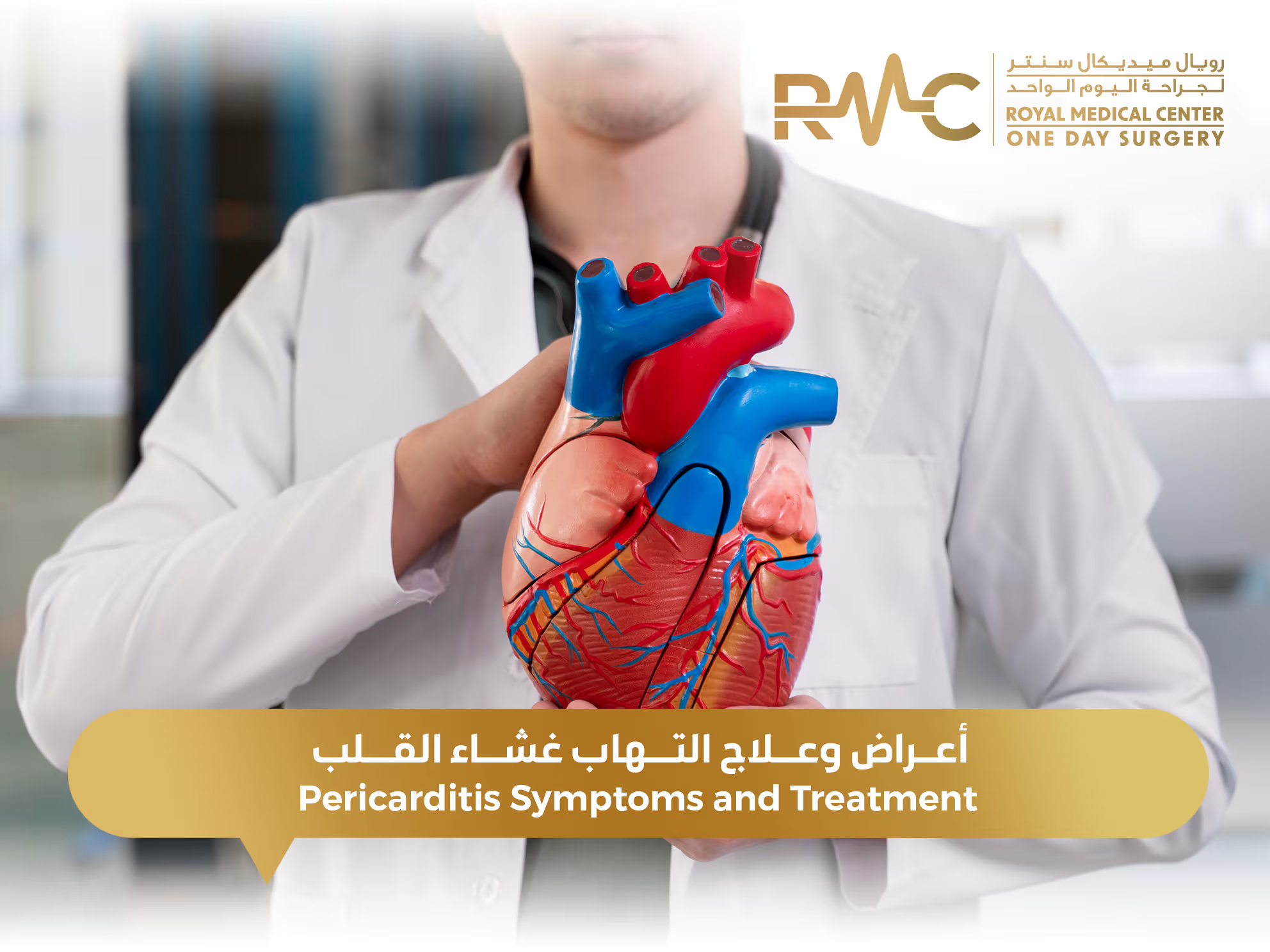
In medical terms, few symptoms may be more disturbing to a person than soreness in the chest. Although many people think of a heart attack when they have acute chest discomfort, pericarditis is another major cardiovascular illness that produces sudden, severe chest pain. Pericarditis is irritation and inflammation of the pericardium, the thin, two-layered, fluid-filled sac that surrounds and protects the heart. The inflamed layers rub together, generating friction that produces intense chest discomfort that may mimic other heart conditions. It’s crucial to know what might trigger it and to be able to detect warning signs. Getting medical assistance soon away is essential to protect your heart health. Royal Medical Center One Day Surgery delivers compassionate care, accurate diagnostic evaluations and well-structured treatment regimens to effectively and safely treat heart inflammation and manage pericarditis symptoms in Abu Dhabi.
What Causes the Sac Around the Heart to Become Inflamed?
Looking at the causes of pericarditis, cardiologists can identify if it is acute, recurring, or developing into a chronic condition. In many clinical conditions it is not possible to be confident about the specific single aetiology and this is termed idiopathic pericarditis. But there are a number of identified causes which typically induce inflammation of the pericardial sac:
- Viral Infection: They are often triggered initially by a common viral infection (gastrointestinal viruses, respiratory viruses, or viruses such as influenza or Coxsackievirus).
- Bacterial or Fungal Infections: Bacterial infections (e.g. TB) may cause severe inflammation of the pericardium, but are less common than viral causes.
- Autoimmune disorders : Some systemic inflammatory disorders like systemic lupus erythematosus (SLE), rheumatoid arthritis and scleroderma may lead to the immune system mistakenly attacking the pericardium.
- Inflammation After a Heart Attack or Heart Surgery: Inflammation may start right away after a heart attack or open-heart surgery because of tissue injury or an immune response called Dressler syndrome.
- Physical Trauma: Blunt or penetrating trauma to the chest from motor vehicle accidents or contact sports may injure the pericardium.
- Metabolic and Kidney Disorders: In severe kidney failure (uremia), metabolic wastes collect in the blood, and aggravate the cardiac membranes.
- Drug responses: Some prescription medicines may trigger autoimmune responses that can injure the pericardium.
What are the Recognising Symptoms of Pericarditis Chest Pain?
The characteristic feature of pericardial inflammation is sharp, abrupt chest pain. But to distinguish this discomfort from other cardiac disorders, we need to examine what makes it distinct.
The initial signs of pericarditis are:
- Chest Pain - Severe and Sharp: Pericarditis-related chest pain is frequently located beneath the breastbone or on the left side of the chest. It generally radiates to the left shoulder, neck or back. The pain of pericarditis is often acute, stabbing or piercing, as opposed to the heavy pressing pressure you get with a traditional heart attack, he explains.
- Positional Pain Fluctuations: A hallmark of inflammation of the pericardium is that the intensity of chest pain fluctuates with the body position and respiration. The pain may be worse when you lie flat on your back, cough, swallow or take a deep breath. Another relatively relaxing situation is to sit up straight and lean forward, which decreases the friction between the inflamed layers of the pericardium.
Other signals:
Depending on whether the condition is viral, bacterial or systemic, patients may also have:
- Mild fever, shakes, muscular ache
- Shortness of breath, especially while lying down
- Constant fatigue and loss of strength
- Persistent dry cough
- Heart racing or palpitations
- Legs, feet or belly swelling (in chronic or severe cases when fluid builds up around the heart)
It is crucial to recognise these symptoms soon and get evaluation from a reputable pericarditis expert Abu Dhabi patients depend on to avoid long-term complications.
Pericarditis - How to Diagnose?
To diagnose pericarditis, you need a solid history and several diagnostic procedures to rule out a heart attack or pulmonary embolism. A pericarditis specialist in Abu Dhabi would commonly use the following diagnostic tools while evaluating chest pain:
- Stethoscope Examination: When you listen over the chest, you may hear a strange high-pitched sound, called a "pericardial friction rub." This is caused by the layers of the inflamed sac rubbing against each other.
- Electrocardiogram (ECG/EKG): Records electrical activity of heart. The ST Segment Changes In Pericarditis Are Different Than Those Seen In An Acute Heart Attack And Are Widespread
- Echocardiogram: This is an ultrasound scan of the heart. This allows the doctor to examine for fluid build-up in the pericardial region (pericardial effusion) and the overall pumping function.
- Laboratory Blood Tests: Inflammatory markers (C-reactive protein (CRP), Erythrocyte sedimentation rate (ESR), Cardiac enzymes (troponin).
- Chest X-Ray or Cardiac MRI - High resolution imaging helps to rule out lung infections and looks at the thickness and quality of the pericardium.
Treatment Options: Acute Care to Chronic Management
Treatment focuses primarily to relieve inflammation and pain, to prevent recurrences, and to eliminate any underlying cause.
Management of acute pericarditis
The cornerstone of treatment for acute pericarditis, fresh or first episode, is conservative medical management:
- Nonsteroidal Anti-Inflammatory Drugs (NSAIDs) : High dosage ibuprofen, indomethacin or high dose aspirin are the mainstays of treatment and minimise pain and tissue swelling.
- Colchicine: An anti-inflammatory medicine first developed for the treatment of gout has been shown to be highly effective in the treatment of acute pericarditis and significantly lowering the odds of recurrence.
- Corticosteroids: If NSAIDs and colchicine fail or if there is an underlying autoimmune disease, steroids such as prednisone may be used, but only under close medical supervision.
Treatment for chronic pericarditis.
If inflammation persists for longer than 3 months or recurrences happen, specialised treatment options for chronic pericarditis are needed:
- Targeted Immunomodulatory Therapies - With sophisticated medications that target specific inflammatory pathways, they are beneficial in addressing resistant, recurrent cases (e.g. interleukin-1 inhibitors).
- Pericardial Effusion Management: If the pericardial sac is filled with too much fluid and pressure is put on the heart (cardiac tamponade), a minimally invasive procedure called pericardiocentesis is done to safely remove the fluid.
- Pericardiectomy: In rare cases, long-standing inflammation may cause the pericardium to become a stiff scar tissue, known as constrictive pericarditis. In certain instances, the rigid sac may have to be surgically excised so the heart may expand properly.
Royal Medical Center One Day Surgery provides a thorough clinical evaluation and outpatient care approaches for the treatment of pericarditis in Abu Dhabi. It is a benefit to people who need particular attention.
FAQ
Q: What is the difference between a heart attack and pericarditis?
A: Heart attack pain is usually described as a heavy, squeezing or crushing weight in the center of the chest that does not change with position. The discomfort of pericarditis is often sharp and severe and is often worse while lying flat or with heavy breathing, and better when sitting and leaning forward. But any severe chest pain is life threatening and requires immediate emergency medical evaluation.
Q: How long does acute pericarditis take?
A: Mild acute pericarditis usually resolves within two to four weeks if treated medically and the patient rests. But you have to take the anti-inflammatory medications that are given to you for the whole time or the condition might become recurring.
Q: Am I allowed to exercise with pericarditis?
A: No. Patients recovering from active pericardial inflammation should avoid strenuous physical activity and heavy exertion until their symptoms have completely resolved and blood markers of inflammation have normalised. Attacks may be provoked by physical stress.
Conclusion
Scary chest pain may be a symptom of pericarditis, but most people recover completely without lasting damage to the heart when they get quick medical evaluation, appropriate diagnostic imaging and targeted anti-inflammatory medication. Recognising key danger symptoms like acute chest pain that improves as you lean forward might prompt fast action. The caring team at Royal Medical Center One Day Surgery are committed to helping you safely and comfortably address your heart health concerns by providing you with complete clinical examination and state-of-the-art diagnostic assistance. If you have chest discomfort or need a specialist examination, book an appointment with a doctor at Royal Medical Center One Day Surgery now.
